
# HDMI Encoder for IPTV Technical Breakdown and High Definition Streaming
The hdmi encoder for iptv represents a fundamental pillar of modern video digitization, signal processing, and live broadcast delivery over internet protocol networks. By capturing raw high definition or ultra high definition video from an HDMI source and compressing it into an optimized digital stream, the hdmi encoder for iptv enables seamless content distribution across local networks and worldwide streaming platforms. As home entertainment hardware advances toward crisp four K resolution, understanding how an hdmi encoder for iptv works becomes essential for broadcast engineers and streaming enthusiasts alike.
In this detailed technical study exceeding thirteen hundred words, we examine all core features of the hdmi encoder for iptv. We analyze video capture pipelines, H.264 and H.265 HEVC encoding algorithms, real time transmission protocols, hardware implementation considerations, and why Eagle4k provides the perfect infrastructure to complement advanced encoding hardware, finishing with responses to common user questions.
## Understanding the HDMI Encoder for IPTV
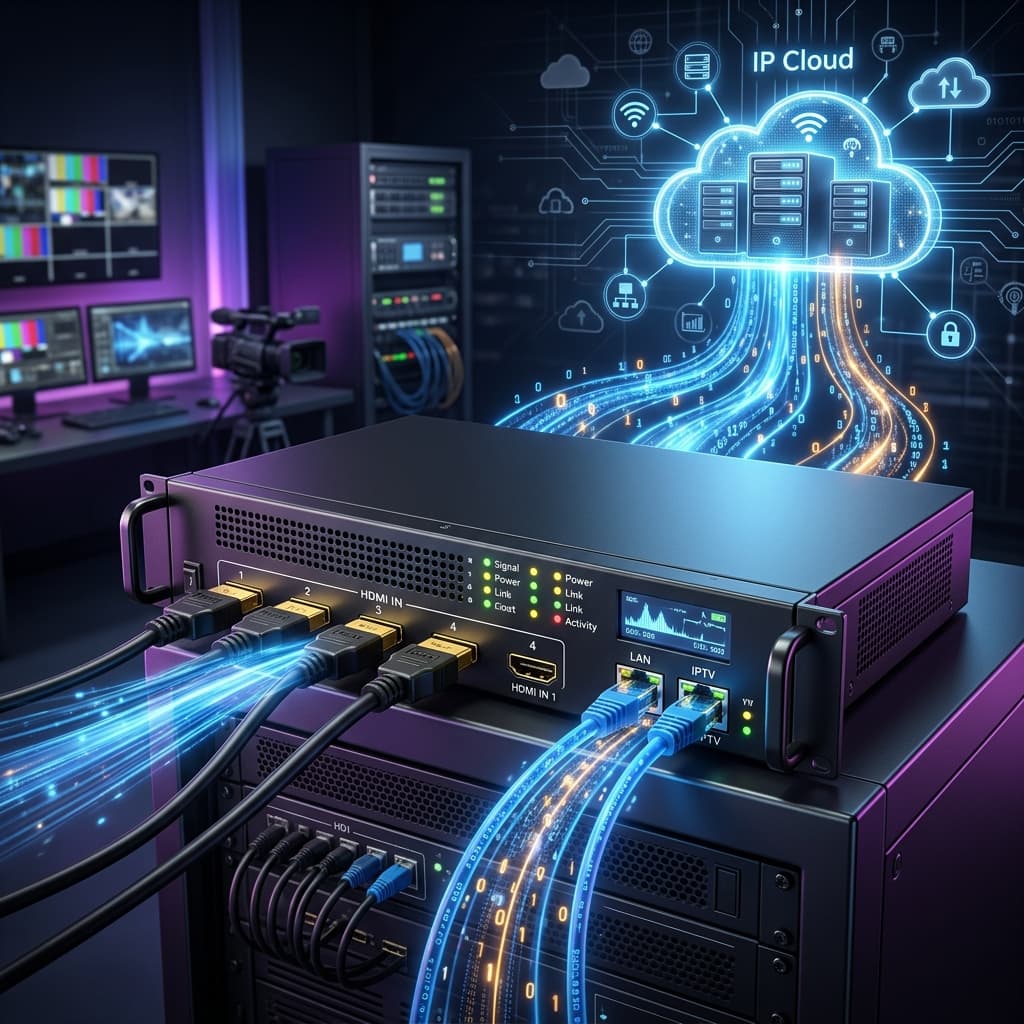
An hdmi encoder for iptv is a hardware device or specialized software application designed to transform uncompressed digital video received through an HDMI port into a network friendly IP stream. Sources connected to the encoder can include professional broadcast cameras, satellite set top boxes, media players, gaming consoles, and desktop computer displays.
The primary purpose of an hdmi encoder for iptv is data reduction without perceptible visual degradation. Raw uncompressed video at high definition or four K resolution generates gigabits of data per second, far exceeding the throughput capabilities of standard internet connections. The encoder compresses this vast data stream into manageable bitrates that flow easily across network routers and switches.
Deploying an hdmi encoder for iptv opens up extensive possibilities for commercial and residential applications. Broadcasters use these units to deliver live remote sports coverage, educational institutions stream lectures to distant campuses, hospitality venues distribute specialized television channels, and homeowners create centralized video distribution systems.
## How an HDMI Encoder for IPTV Processes Live Signals
The signal transformation performed by an hdmi encoder for iptv follows a series of precise processing stages executed in milliseconds.
First, signal ingestion and frame buffering. The encoder receives uncompressed digital video and multi channel audio through its HDMI input interface. The hardware digitizes frame data at high refresh rates reaching up to sixty frames per second in full four K resolution.
Second, video compression processing. The internal processor inside the hdmi encoder for iptv applies advanced spatial and temporal compression algorithms. Spatial compression removes redundant pixel information within individual frames, while temporal compression identifies identical elements across successive frames, transmitting only the differences.
Third, stream encapsulation and packetization. The compressed video and audio streams are combined into a standardized transport container such as MPEG TS. The encoder then segments this container data into IP network packets formatted according to specific streaming protocols.
Fourth, network transmission. The hdmi encoder for iptv transmits these IP packets over Ethernet connections to distribution servers or target display devices, making live video immediately accessible to connected subscribers.
## Video Compression Standards and Encoding Capabilities
The choice of compression codec inside an hdmi encoder for iptv directly affects final visual fidelity and overall network bandwidth consumption.
H.264 AVC remains a widely supported video compression standard across the global streaming landscape. An hdmi encoder for iptv configured with H.264 ensures universal playback compatibility across virtually all legacy set top boxes, Smart TVs, mobile phones, and web browsers. However, achieving high quality four K streaming using H.264 requires substantial network bitrates.
H.265 HEVC represents the definitive technological leap for modern hdmi encoder for iptv hardware. Offering up to fifty percent greater compression efficiency than H.264 at identical visual quality, H.265 enables smooth four K Ultra HD streaming over standard broadband connections. This high efficiency encoding is what Eagle4k utilizes across its global network architecture to deliver uncompromised visual clarity.
Alongside video processing, the hdmi encoder for iptv manages professional audio encoding using codecs such as AAC and MP3, guaranteeing clear sound reproduction perfectly synchronized with video playback.
## Streaming Protocols and Network Integration
To route encoded video reliably from the hdmi encoder for iptv to streaming servers and end user playback devices, robust communication protocols are essential.
RTMP Real Time Messaging Protocol is widely used for sending encoded live feeds from an hdmi encoder for iptv to ingestion servers with low latency, making it a popular choice for live event production.
HLS HTTP Live Streaming developed by Apple is the global standard for end user stream delivery. An hdmi encoder for iptv paired with HLS breaks video into small numbered segments served over standard HTTP web infrastructure, allowing connected devices to automatically adjust playback quality based on real time internet speed.
SRT Secure Reliable Transport is an emerging protocol revolutionizing the hdmi encoder for iptv market. Designed specifically to navigate unreliable public internet paths, SRT incorporates packet loss recovery mechanisms that preserve stream integrity even under challenging network conditions.
## Why Eagle4k Delivers Exceptional Streaming Infrastructure
While an hdmi encoder for iptv generates high quality digital streams, delivering those feeds flawlessly to home viewers demands enterprise grade network infrastructure. Eagle4k stands as the premier choice for reliable high definition content distribution.
Eagle4k operates a globally distributed server architecture reinforced by Anti Freeze version nine point zero technology. Our network receives and distributes video streams with uptime exceeding ninety nine point nine percent. Even during peak concurrent viewing hours during major international sporting tournaments, Eagle4k maintains completely smooth playback without buffering or signal interruption.
Our extensive catalog features more than twenty thousand live television channels and over one hundred sixty thousand movies and series in our video on demand library. By supporting native four K Ultra HD content compressed in H.265 HEVC, Eagle4k provides an unmatched visual environment across all subscriber screens.
## Hardware Setup and Home Network Optimization
To maximize performance when utilizing an hdmi encoder for iptv or receiving premium streaming content from Eagle4k, following several optimization steps is highly recommended.
First, use wired Ethernet connections. While wireless Wi Fi offers convenience, direct Ethernet cables eliminate wireless signal interference, packet loss, and latency spikes, ensuring uninterrupted video delivery.
Second, verify internet bandwidth capacity. A minimum download speed of fifteen megabits per second is suitable for standard high definition video. For uncompressed four K Ultra HD streaming at sixty frames per second, we recommend a reliable internet download speed of fifty megabits per second or higher.
Third, select modern decoding hardware. Ensure your playback devices, such as Samsung Smart TVs running Tizen OS, LG Smart TVs running webOS, Nvidia Shield Pro Android TV boxes, or Amazon Firestick media players, feature native hardware support for H.265 HEVC decoding.
Fourth, keep firmware updated. Regularly updating the firmware on your hdmi encoder for iptv and media player applications ensures optimum stability, security enhancements, and compatibility improvements.
## Frequently Asked Questions About HDMI Encoder for IPTV
Question one. What is the primary function of an hdmi encoder for iptv?
Answer. An hdmi encoder for iptv converts uncompressed digital video from an HDMI source into a compressed IP stream ready for transmission across local networks or the internet.
Question two. How does H.265 compare to H.264 in an hdmi encoder for iptv?
Answer. H.265 HEVC provides up to fifty percent greater compression efficiency than H.264, allowing higher resolution video streaming using half the network bandwidth.
Question three. Can an hdmi encoder for iptv stream four K content?
Answer. Yes, modern hardware models of hdmi encoder for iptv accept four K HDMI input signals and broadcast crystal clear four K Ultra HD video streams at sixty frames per second.
Question four. Which streaming protocols are supported by an hdmi encoder for iptv?
Answer. Commonly supported protocols include RTMP, HLS, SRT, and RTSP, each offering distinct advantages for latency, security, and device compatibility.
Question five. Why choose Eagle4k to view high quality encoded streams?
Answer. Eagle4k combines Anti Freeze version nine point zero technology, high speed global data centers, an expansive catalog, and twenty four seven technical support to ensure seamless streaming.
## Conclusion
The hdmi encoder for iptv is a vital piece of hardware for digitizing and delivering high quality video streams across modern IP networks. Combining powerful video encoding capabilities with the reliable infrastructure of Eagle4k yields an uncompromised four K Ultra HD viewing experience. Claim your free twenty four hour trial account today to experience superior digital entertainment.
The hdmi encoder for iptv represents a fundamental pillar of modern video digitization, signal processing, and live broadcast delivery over internet protocol networks. By capturing raw high definition or ultra high definition video from an HDMI source and compressing it into an optimized digital stream, the hdmi encoder for iptv enables seamless content distribution across local networks and worldwide streaming platforms. As home entertainment hardware advances toward crisp four K resolution, understanding how an hdmi encoder for iptv works becomes essential for broadcast engineers and streaming enthusiasts alike.
In this detailed technical study exceeding thirteen hundred words, we examine all core features of the hdmi encoder for iptv. We analyze video capture pipelines, H.264 and H.265 HEVC encoding algorithms, real time transmission protocols, hardware implementation considerations, and why Eagle4k provides the perfect infrastructure to complement advanced encoding hardware, finishing with responses to common user questions.
## Understanding the HDMI Encoder for IPTV
An hdmi encoder for iptv is a hardware device or specialized software application designed to transform uncompressed digital video received through an HDMI port into a network friendly IP stream. Sources connected to the encoder can include professional broadcast cameras, satellite set top boxes, media players, gaming consoles, and desktop computer displays.
The primary purpose of an hdmi encoder for iptv is data reduction without perceptible visual degradation. Raw uncompressed video at high definition or four K resolution generates gigabits of data per second, far exceeding the throughput capabilities of standard internet connections. The encoder compresses this vast data stream into manageable bitrates that flow easily across network routers and switches.
Deploying an hdmi encoder for iptv opens up extensive possibilities for commercial and residential applications. Broadcasters use these units to deliver live remote sports coverage, educational institutions stream lectures to distant campuses, hospitality venues distribute specialized television channels, and homeowners create centralized video distribution systems.
## How an HDMI Encoder for IPTV Processes Live Signals
The signal transformation performed by an hdmi encoder for iptv follows a series of precise processing stages executed in milliseconds.
First, signal ingestion and frame buffering. The encoder receives uncompressed digital video and multi channel audio through its HDMI input interface. The hardware digitizes frame data at high refresh rates reaching up to sixty frames per second in full four K resolution.
Second, video compression processing. The internal processor inside the hdmi encoder for iptv applies advanced spatial and temporal compression algorithms. Spatial compression removes redundant pixel information within individual frames, while temporal compression identifies identical elements across successive frames, transmitting only the differences.
Third, stream encapsulation and packetization. The compressed video and audio streams are combined into a standardized transport container such as MPEG TS. The encoder then segments this container data into IP network packets formatted according to specific streaming protocols.
Fourth, network transmission. The hdmi encoder for iptv transmits these IP packets over Ethernet connections to distribution servers or target display devices, making live video immediately accessible to connected subscribers.
## Video Compression Standards and Encoding Capabilities
The choice of compression codec inside an hdmi encoder for iptv directly affects final visual fidelity and overall network bandwidth consumption.
H.264 AVC remains a widely supported video compression standard across the global streaming landscape. An hdmi encoder for iptv configured with H.264 ensures universal playback compatibility across virtually all legacy set top boxes, Smart TVs, mobile phones, and web browsers. However, achieving high quality four K streaming using H.264 requires substantial network bitrates.
H.265 HEVC represents the definitive technological leap for modern hdmi encoder for iptv hardware. Offering up to fifty percent greater compression efficiency than H.264 at identical visual quality, H.265 enables smooth four K Ultra HD streaming over standard broadband connections. This high efficiency encoding is what Eagle4k utilizes across its global network architecture to deliver uncompromised visual clarity.
Alongside video processing, the hdmi encoder for iptv manages professional audio encoding using codecs such as AAC and MP3, guaranteeing clear sound reproduction perfectly synchronized with video playback.
## Streaming Protocols and Network Integration
To route encoded video reliably from the hdmi encoder for iptv to streaming servers and end user playback devices, robust communication protocols are essential.
RTMP Real Time Messaging Protocol is widely used for sending encoded live feeds from an hdmi encoder for iptv to ingestion servers with low latency, making it a popular choice for live event production.
HLS HTTP Live Streaming developed by Apple is the global standard for end user stream delivery. An hdmi encoder for iptv paired with HLS breaks video into small numbered segments served over standard HTTP web infrastructure, allowing connected devices to automatically adjust playback quality based on real time internet speed.
SRT Secure Reliable Transport is an emerging protocol revolutionizing the hdmi encoder for iptv market. Designed specifically to navigate unreliable public internet paths, SRT incorporates packet loss recovery mechanisms that preserve stream integrity even under challenging network conditions.
## Why Eagle4k Delivers Exceptional Streaming Infrastructure
While an hdmi encoder for iptv generates high quality digital streams, delivering those feeds flawlessly to home viewers demands enterprise grade network infrastructure. Eagle4k stands as the premier choice for reliable high definition content distribution.
Eagle4k operates a globally distributed server architecture reinforced by Anti Freeze version nine point zero technology. Our network receives and distributes video streams with uptime exceeding ninety nine point nine percent. Even during peak concurrent viewing hours during major international sporting tournaments, Eagle4k maintains completely smooth playback without buffering or signal interruption.
Our extensive catalog features more than twenty thousand live television channels and over one hundred sixty thousand movies and series in our video on demand library. By supporting native four K Ultra HD content compressed in H.265 HEVC, Eagle4k provides an unmatched visual environment across all subscriber screens.
## Hardware Setup and Home Network Optimization
To maximize performance when utilizing an hdmi encoder for iptv or receiving premium streaming content from Eagle4k, following several optimization steps is highly recommended.
First, use wired Ethernet connections. While wireless Wi Fi offers convenience, direct Ethernet cables eliminate wireless signal interference, packet loss, and latency spikes, ensuring uninterrupted video delivery.
Second, verify internet bandwidth capacity. A minimum download speed of fifteen megabits per second is suitable for standard high definition video. For uncompressed four K Ultra HD streaming at sixty frames per second, we recommend a reliable internet download speed of fifty megabits per second or higher.
Third, select modern decoding hardware. Ensure your playback devices, such as Samsung Smart TVs running Tizen OS, LG Smart TVs running webOS, Nvidia Shield Pro Android TV boxes, or Amazon Firestick media players, feature native hardware support for H.265 HEVC decoding.
Fourth, keep firmware updated. Regularly updating the firmware on your hdmi encoder for iptv and media player applications ensures optimum stability, security enhancements, and compatibility improvements.
## Frequently Asked Questions About HDMI Encoder for IPTV
Question one. What is the primary function of an hdmi encoder for iptv?
Answer. An hdmi encoder for iptv converts uncompressed digital video from an HDMI source into a compressed IP stream ready for transmission across local networks or the internet.
Question two. How does H.265 compare to H.264 in an hdmi encoder for iptv?
Answer. H.265 HEVC provides up to fifty percent greater compression efficiency than H.264, allowing higher resolution video streaming using half the network bandwidth.
Question three. Can an hdmi encoder for iptv stream four K content?
Answer. Yes, modern hardware models of hdmi encoder for iptv accept four K HDMI input signals and broadcast crystal clear four K Ultra HD video streams at sixty frames per second.
Question four. Which streaming protocols are supported by an hdmi encoder for iptv?
Answer. Commonly supported protocols include RTMP, HLS, SRT, and RTSP, each offering distinct advantages for latency, security, and device compatibility.
Question five. Why choose Eagle4k to view high quality encoded streams?
Answer. Eagle4k combines Anti Freeze version nine point zero technology, high speed global data centers, an expansive catalog, and twenty four seven technical support to ensure seamless streaming.
## Conclusion
The hdmi encoder for iptv is a vital piece of hardware for digitizing and delivering high quality video streams across modern IP networks. Combining powerful video encoding capabilities with the reliable infrastructure of Eagle4k yields an uncompromised four K Ultra HD viewing experience. Claim your free twenty four hour trial account today to experience superior digital entertainment.