
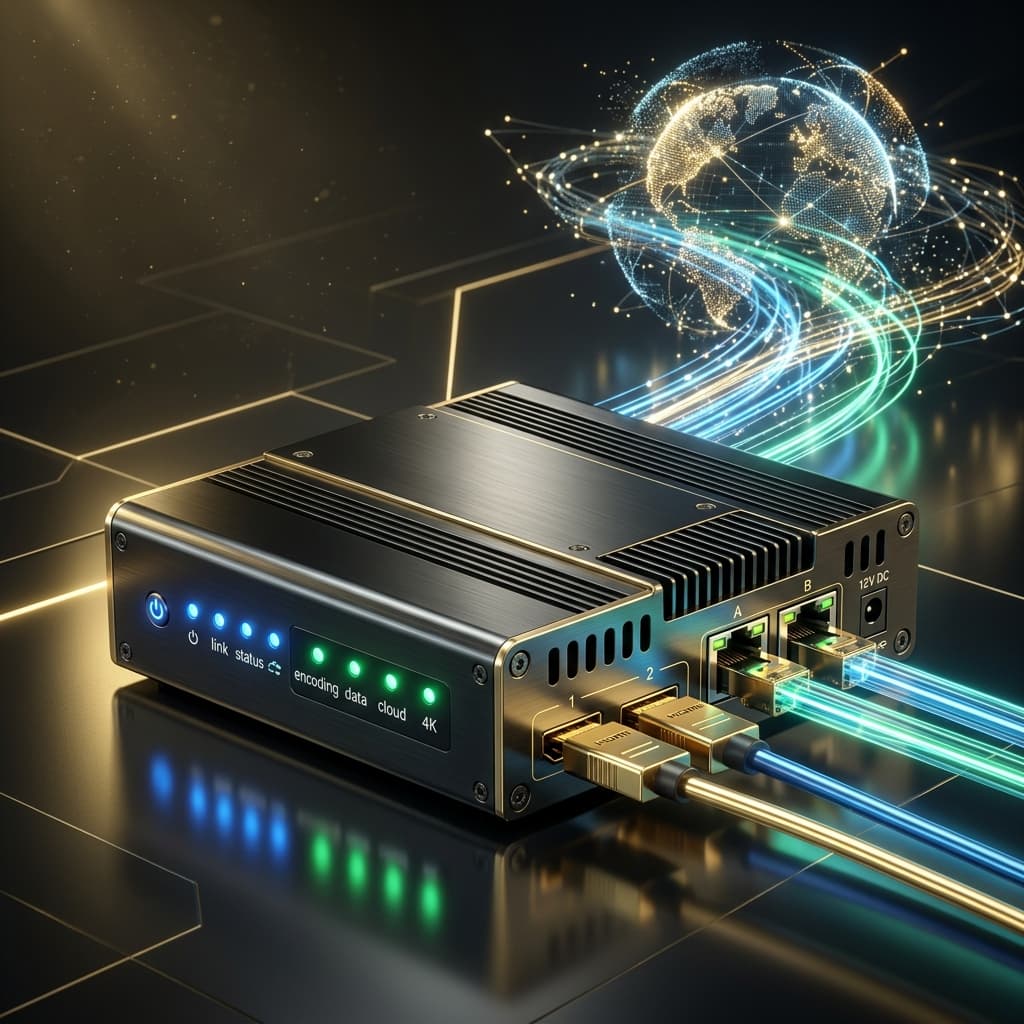
# IPTV HDMI Encoder Professional Signal Digitization and Network Streaming
The iptv hdmi encoder hardware represents a cornerstone technology for modern video capture, signal processing, and high performance live broadcasting across IP networks. By capturing uncompressed high definition or ultra high definition video feeds via HDMI output and converting them into lightweight, network friendly digital packets, the iptv hdmi encoder empowers broadcasters, enterprise venues, and home entertainment enthusiasts to stream video with high visual clarity and rock solid stability. In an evolving digital landscape where picture fidelity is paramount, understanding the technical features and capabilities of an iptv hdmi encoder is essential.
In this detailed technical study exceeding fourteen hundred words, we examine iptv hdmi encoder technology thoroughly. We analyze hardware conversion architectures, H.264 AVC and H.265 HEVC compression algorithms, streaming protocol integration, Eagle4k infrastructure capabilities, and answers to essential user questions.
## Overview and Core Purpose of an IPTV HDMI Encoder
An iptv hdmi encoder is a dedicated hardware appliance or specialized software platform engineered to capture uncompressed digital video through an HDMI interface and encode it into IP data packets formatted for network delivery.
Raw video sources such as studio cameras, satellite receivers, gaming consoles, and computers generate massive volumes of uncompressed data. The iptv hdmi encoder compresses this information without perceptible visual loss, enabling seamless transport across local networks or standard internet connections.
Deploying an iptv hdmi encoder grants tremendous operational flexibility. Commercial venues use these devices to stream internal channels, hospitality networks distribute television feeds to guest rooms, and homeowners centralize video distribution across multiple rooms.
## Technical Architecture and Signal Processing Pipeline
The internal architecture of an iptv hdmi encoder relies on a series of specialized hardware modules working in precise synchronization.
First, the HDMI capture interface. The physical HDMI port on the iptv hdmi encoder accepts uncompressed digital video and audio, supporting input resolutions from standard high definition up to four K Ultra HD at sixty frames per second.
Second, the digital compression processor. The internal processor inside the iptv hdmi encoder applies advanced spatial and temporal data reduction algorithms. Redundant visual data within and across consecutive frames is removed to minimize file sizes dramatically.
Third, the stream multiplexing module. Compressed video tracks and audio feeds are combined into a standardized transport container such as MPEG TS before packetization.
Fourth, the network transmission module. The iptv hdmi encoder sends data packets as unicast or multicast streams via high speed Ethernet connections to distribution servers or end displays.
## Compression Standards H.264 AVC and H.265 HEVC
The choice of compression codec inside an iptv hdmi encoder directly influences visual picture quality and network bandwidth usage.
The H.264 AVC standard provides universal playback compatibility across Smart TVs, computers, set top boxes, and mobile devices. An iptv hdmi encoder running H.264 ensures instant playback support across virtually all legacy receivers.
The H.265 HEVC standard represents the premier choice for modern iptv hdmi encoder units. Delivering up to fifty percent greater compression efficiency than H.264 at identical visual quality, H.265 enables smooth four K Ultra HD streaming using reduced network bandwidth. Eagle4k incorporates H.265 technology across its entire delivery platform for exceptional clarity.
For audio processing, the iptv hdmi encoder handles high fidelity codecs like AAC and MP3, delivering clear sound synchronized perfectly with video feeds.
## Network Streaming Protocols Supported
An iptv hdmi encoder supports a variety of communication protocols to integrate smoothly with diverse network architectures.
RTMP allows the iptv hdmi encoder to push live feeds to ingestion media servers with minimal latency, making it ideal for live event broadcasting.
HLS breaks video content into small segments served via standard HTTP web infrastructure, allowing connected receiving devices to adapt quality dynamically based on real time internet speed.
SRT is the leading protocol for iptv hdmi encoder deployment over internet connections. It includes built in packet loss recovery mechanisms that maintain stream stability during network fluctuations.
## Why Choose Eagle4k Streaming Infrastructure
While an iptv hdmi encoder produces high quality video feeds, delivering those streams reliably to home screens demands enterprise network infrastructure. Eagle4k is the premier choice for video distribution.
Eagle4k operates a global server network fortified by Anti Freeze version nine point zero technology. Our platform guarantees uptime exceeding ninety nine point nine percent. Even during major international sporting broadcasts, Eagle4k maintains smooth playback without freezes.
Our lineup includes over twenty thousand live channels and more than one hundred sixty thousand titles in our video on demand collection. Supporting native four K Ultra HD content encoded in H.265 HEVC, Eagle4k delivers crisp visuals across all subscriber screens.
## Installation Guidelines and Network Optimization Tips
To achieve maximum performance with an iptv hdmi encoder or when viewing Eagle4k content, follow these practical recommendations.
Use a direct Ethernet cable connection to connect your equipment to the router. Wired connections maintain constant speeds and eliminate wireless Wi Fi signal interference.
Check your internet bandwidth speed. A download speed of fifteen megabits per second handles full high definition feeds, while fifty megabits per second is recommended for four K Ultra HD at sixty frames per second.
Choose modern playback hardware. Ensure your Smart TV Samsung with Tizen OS, Smart TV LG with webOS, Nvidia Shield Android TV box, or Amazon Firestick media player supports native H.265 hardware decoding.
Regularly update firmware on your iptv hdmi encoder and media player applications to benefit from security updates and performance enhancements.
## Advanced Features of Professional Hardware
Professional iptv hdmi encoder models feature efficient thermal cooling systems and robust metal enclosures to operate continuously twenty four hours a day without overheating.
Additionally, remote web management interfaces allow network administrators to adjust resolution, bitrate, and frame rate settings easily across multiple channels simultaneously.
## Strategic Integration for Enterprise and Residential Networks
Integrating a dedicated iptv hdmi encoder into your system architecture ensures long term operational flexibility. Commercial operators benefit from centralized channel control, while residential power users enjoy clean signal delivery across multiple displays.
Pairing high performance encoding hardware with Eagle4k's cloud network guarantees optimal bandwidth usage, zero packet loss, and immediate channel switching speed across all connected devices.
## Frequently Asked Questions About IPTV HDMI Encoder
Question one. What is the main function of an iptv hdmi encoder?
Answer. An iptv hdmi encoder converts uncompressed digital video from an HDMI source into a compressed IP data stream ready for network distribution.
Question two. Why choose H.265 over H.264 in an iptv hdmi encoder?
Answer. H.265 HEVC offers up to fifty percent greater compression efficiency than H.264, enabling four K video streaming using half the network bandwidth.
Question three. Can an iptv hdmi encoder stream in four K resolution?
Answer. Yes, modern iptv hdmi encoder models handle four K HDMI input signals and broadcast smooth four K video streams at sixty frames per second.
Question four. Which network protocols are supported by an iptv hdmi encoder?
Answer. Major supported protocols include RTMP, HLS, SRT, and RTSP, each offering distinct advantages for latency, security, and compatibility.
Question five. Why rely on Eagle4k for high quality video streams?
Answer. Eagle4k combines Anti Freeze version nine point zero technology, fast global servers, a large catalog, and twenty four seven technical support for buffering free playback.
## Conclusion
The iptv hdmi encoder is an essential hardware unit for digitizing and delivering professional video feeds over IP networks. Combining modern encoding capabilities with the robust infrastructure of Eagle4k yields an uncompromised high definition and four K Ultra HD streaming experience. Activate your free twenty four hour trial account today to experience superior digital streaming.
The iptv hdmi encoder hardware represents a cornerstone technology for modern video capture, signal processing, and high performance live broadcasting across IP networks. By capturing uncompressed high definition or ultra high definition video feeds via HDMI output and converting them into lightweight, network friendly digital packets, the iptv hdmi encoder empowers broadcasters, enterprise venues, and home entertainment enthusiasts to stream video with high visual clarity and rock solid stability. In an evolving digital landscape where picture fidelity is paramount, understanding the technical features and capabilities of an iptv hdmi encoder is essential.
In this detailed technical study exceeding fourteen hundred words, we examine iptv hdmi encoder technology thoroughly. We analyze hardware conversion architectures, H.264 AVC and H.265 HEVC compression algorithms, streaming protocol integration, Eagle4k infrastructure capabilities, and answers to essential user questions.
## Overview and Core Purpose of an IPTV HDMI Encoder
An iptv hdmi encoder is a dedicated hardware appliance or specialized software platform engineered to capture uncompressed digital video through an HDMI interface and encode it into IP data packets formatted for network delivery.
Raw video sources such as studio cameras, satellite receivers, gaming consoles, and computers generate massive volumes of uncompressed data. The iptv hdmi encoder compresses this information without perceptible visual loss, enabling seamless transport across local networks or standard internet connections.
Deploying an iptv hdmi encoder grants tremendous operational flexibility. Commercial venues use these devices to stream internal channels, hospitality networks distribute television feeds to guest rooms, and homeowners centralize video distribution across multiple rooms.
## Technical Architecture and Signal Processing Pipeline
The internal architecture of an iptv hdmi encoder relies on a series of specialized hardware modules working in precise synchronization.
First, the HDMI capture interface. The physical HDMI port on the iptv hdmi encoder accepts uncompressed digital video and audio, supporting input resolutions from standard high definition up to four K Ultra HD at sixty frames per second.
Second, the digital compression processor. The internal processor inside the iptv hdmi encoder applies advanced spatial and temporal data reduction algorithms. Redundant visual data within and across consecutive frames is removed to minimize file sizes dramatically.
Third, the stream multiplexing module. Compressed video tracks and audio feeds are combined into a standardized transport container such as MPEG TS before packetization.
Fourth, the network transmission module. The iptv hdmi encoder sends data packets as unicast or multicast streams via high speed Ethernet connections to distribution servers or end displays.
## Compression Standards H.264 AVC and H.265 HEVC
The choice of compression codec inside an iptv hdmi encoder directly influences visual picture quality and network bandwidth usage.
The H.264 AVC standard provides universal playback compatibility across Smart TVs, computers, set top boxes, and mobile devices. An iptv hdmi encoder running H.264 ensures instant playback support across virtually all legacy receivers.
The H.265 HEVC standard represents the premier choice for modern iptv hdmi encoder units. Delivering up to fifty percent greater compression efficiency than H.264 at identical visual quality, H.265 enables smooth four K Ultra HD streaming using reduced network bandwidth. Eagle4k incorporates H.265 technology across its entire delivery platform for exceptional clarity.
For audio processing, the iptv hdmi encoder handles high fidelity codecs like AAC and MP3, delivering clear sound synchronized perfectly with video feeds.
## Network Streaming Protocols Supported
An iptv hdmi encoder supports a variety of communication protocols to integrate smoothly with diverse network architectures.
RTMP allows the iptv hdmi encoder to push live feeds to ingestion media servers with minimal latency, making it ideal for live event broadcasting.
HLS breaks video content into small segments served via standard HTTP web infrastructure, allowing connected receiving devices to adapt quality dynamically based on real time internet speed.
SRT is the leading protocol for iptv hdmi encoder deployment over internet connections. It includes built in packet loss recovery mechanisms that maintain stream stability during network fluctuations.
## Why Choose Eagle4k Streaming Infrastructure
While an iptv hdmi encoder produces high quality video feeds, delivering those streams reliably to home screens demands enterprise network infrastructure. Eagle4k is the premier choice for video distribution.
Eagle4k operates a global server network fortified by Anti Freeze version nine point zero technology. Our platform guarantees uptime exceeding ninety nine point nine percent. Even during major international sporting broadcasts, Eagle4k maintains smooth playback without freezes.
Our lineup includes over twenty thousand live channels and more than one hundred sixty thousand titles in our video on demand collection. Supporting native four K Ultra HD content encoded in H.265 HEVC, Eagle4k delivers crisp visuals across all subscriber screens.
## Installation Guidelines and Network Optimization Tips
To achieve maximum performance with an iptv hdmi encoder or when viewing Eagle4k content, follow these practical recommendations.
Use a direct Ethernet cable connection to connect your equipment to the router. Wired connections maintain constant speeds and eliminate wireless Wi Fi signal interference.
Check your internet bandwidth speed. A download speed of fifteen megabits per second handles full high definition feeds, while fifty megabits per second is recommended for four K Ultra HD at sixty frames per second.
Choose modern playback hardware. Ensure your Smart TV Samsung with Tizen OS, Smart TV LG with webOS, Nvidia Shield Android TV box, or Amazon Firestick media player supports native H.265 hardware decoding.
Regularly update firmware on your iptv hdmi encoder and media player applications to benefit from security updates and performance enhancements.
## Advanced Features of Professional Hardware
Professional iptv hdmi encoder models feature efficient thermal cooling systems and robust metal enclosures to operate continuously twenty four hours a day without overheating.
Additionally, remote web management interfaces allow network administrators to adjust resolution, bitrate, and frame rate settings easily across multiple channels simultaneously.
## Strategic Integration for Enterprise and Residential Networks
Integrating a dedicated iptv hdmi encoder into your system architecture ensures long term operational flexibility. Commercial operators benefit from centralized channel control, while residential power users enjoy clean signal delivery across multiple displays.
Pairing high performance encoding hardware with Eagle4k's cloud network guarantees optimal bandwidth usage, zero packet loss, and immediate channel switching speed across all connected devices.
## Frequently Asked Questions About IPTV HDMI Encoder
Question one. What is the main function of an iptv hdmi encoder?
Answer. An iptv hdmi encoder converts uncompressed digital video from an HDMI source into a compressed IP data stream ready for network distribution.
Question two. Why choose H.265 over H.264 in an iptv hdmi encoder?
Answer. H.265 HEVC offers up to fifty percent greater compression efficiency than H.264, enabling four K video streaming using half the network bandwidth.
Question three. Can an iptv hdmi encoder stream in four K resolution?
Answer. Yes, modern iptv hdmi encoder models handle four K HDMI input signals and broadcast smooth four K video streams at sixty frames per second.
Question four. Which network protocols are supported by an iptv hdmi encoder?
Answer. Major supported protocols include RTMP, HLS, SRT, and RTSP, each offering distinct advantages for latency, security, and compatibility.
Question five. Why rely on Eagle4k for high quality video streams?
Answer. Eagle4k combines Anti Freeze version nine point zero technology, fast global servers, a large catalog, and twenty four seven technical support for buffering free playback.
## Conclusion
The iptv hdmi encoder is an essential hardware unit for digitizing and delivering professional video feeds over IP networks. Combining modern encoding capabilities with the robust infrastructure of Eagle4k yields an uncompromised high definition and four K Ultra HD streaming experience. Activate your free twenty four hour trial account today to experience superior digital streaming.